

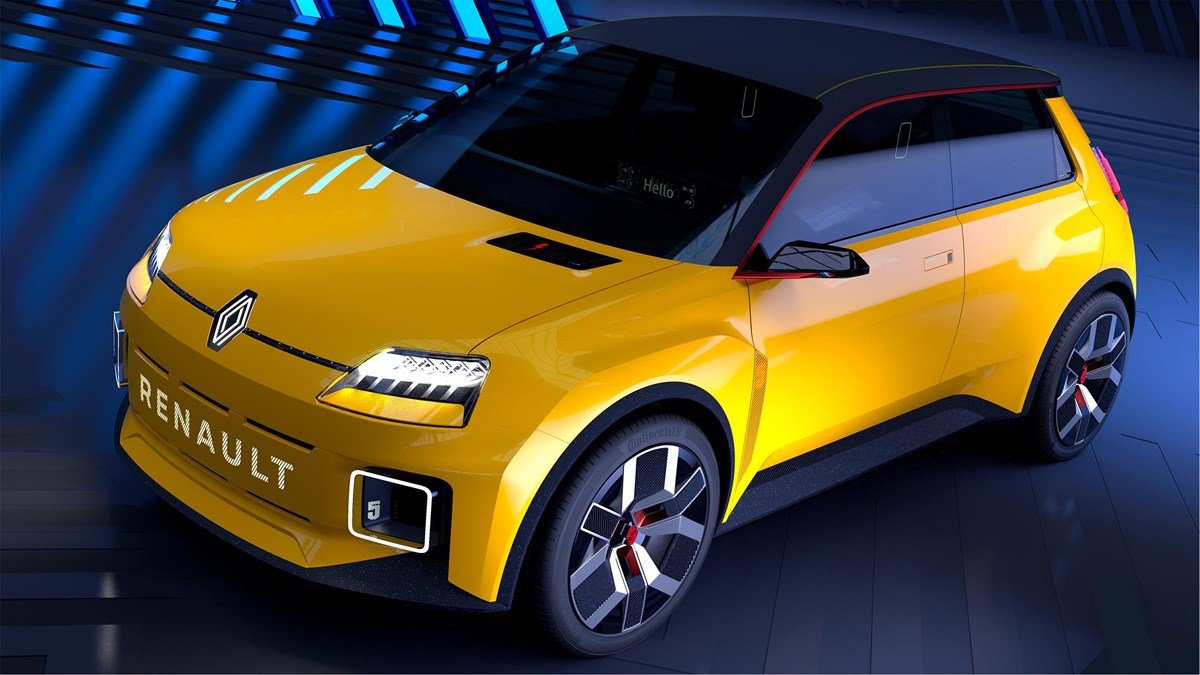
The Renault 5 E-Tech represents Renault’s bold revival of its classic supermini in a fully electric form. With retro-inspired design, modern EV underpinnings, and a clever mix of performance and practicality, it’s positioned to be a standout in the B-segment EV market.

In this blog, we’ll explore the following: design & heritage, platform and powertrains, performance, interior and usability, charging & range, safety & tech, pricing, real-world impressions, comparison to rivals, pros & cons, and who should buy it.
1. A Design Tribute to a Legend
Renault brings back the spirit of the original Renault 5, a small car that became a cultural icon in Europe, but with a modern electric twist:
- The 5 E-Tech’s styling feels retro-futuristic: clean lines, compact proportions, and a refined, friendly face.
- The wheels are pushed to the corners, giving it a sporty and energetic stance.
- Hidden rear door handles (in the C-pillars) preserve the classic two-door coupe look while giving it modern practicality.
- The AmpR Small platform allows a low center of gravity, which helps handling and driving feel.
- Inside, Renault uses “H-shaped” seats inspired by the original R5 Turbo, offering style with support.
- The infotainment system is OpenR Link, built on Google’s OS, with EV-specific features like route planning and charging management.
The overall vibe is a loving modern reinterpretation: retro enough to be nostalgic, but clearly
2. Platform & Powertrains
A key part of the 5 E-Tech is its AmpR Small dedicated EV platform, engineered for efficiency, light weight, and minimal use of rare-earth materials.
Renault offers two main battery options and motor power levels to cater to different needs:
| Configuration | Battery | Power / Motor | Range (WLTP) | Charging |
|---|---|---|---|---|
| Urban / Entry | 40 kWh | ~70 kW / 95 hp, or ~90 kW / 120 hp Motor1.com+2Nyongesa Sande+2 | Up to ~300 km (per Renault IE) | 11 kW AC, DC charging (~80 kW for 40 kWh model) ev-database. |
| Comfort / Long | 52 kWh | ~110 kW / 150 hp | Up to ~410 km WLTP (Renault IE spec) | 11 kW AC; up to ~100 kW DC (for fast charging) |
Some additional notes on the powertrain:
- The motor is a rare-earth-free externally excited synchronous motor (EESM), contributing to better sustainability.
- Regenerative braking is supported, helping recover energy during deceleration.
- Battery safety is a priority: systems like “Fireman Access” (to make intervention safe in case of emergencies) and an SD Switch to disconnect high voltage for first responders are included.
- Battery warranty is generous: Renault offers 8 years or 100,000 miles (or equivalent) on the battery.
3. Performance & Driving Dynamics
How does the Renault 5 E-Tech feel on the road? Here’s what to expect:
- The 150 hp / 52 kWh version is the most powerful trim, delivering spirited acceleration and good mid-range grunt.
- The lower-power 95 hp (70 kW) version is more modest — well-suited for city commuting, especially where high top speed is not critical.
- Thanks to the AmpR Small platform, the car benefits from a low center of gravity, which improves stability, handling, and driving feel.
- Renault’s multi-link rear axle (unusual in compact EVs) enhances ride comfort and handling precision.
- Electric power delivery is instantaneous, with smooth torque from standstill: part of what makes the driving feel so engaging.
Overall, the 5 E-Tech balances performance and usability: it’s nimble and fun in the city, yet capable enough for highway driving in its higher-spec form.
4. Interior Comfort & Practicality
Even though the Renault 5 E-Tech is a compact EV, Renault has packed it with clever design to maximize space, comfort, and functionality:
- The wheelbase is fairly long for a small car: 2,540 mm. This gives better space inside.
- The interior uses eco-conscious materials and a modern design aesthetic.
- Seats with “H-shaped” contours are both retro-inspired and functional, inspired by the Renault 5 Turbo heritage.
- Insulation is a priority: Renault describes it as a “cocoon effect,” reducing road noise and vibrations, so the ride feels quiet and refined.
- The trunk / boot capacity is decent for a compact EV: reports mention approximately 326 L of boot space.
- For daily usability: the small size helps in city driving, parking, and maneuverability.
- On the tech side, the OpenR Link infotainment system includes Google-powered navigation and EV-specific route planning (charging stop recommendations, battery temperature management, etc.).
- Over-the-air (OTA) updates are supported, primarily for infotainment and connected systems.
5. Range, Charging & Efficiency
One of the most important considerations for any EV — what you gain, and what limitations there are — lies in how far you can go, and how long it takes to recharge.
Range
- The 52 kWh version is rated for up to 410 km WLTP (per Renault IE) on a full charge.
- The 40 kWh version is more urban-focused, with a WLTP range of up to 300 km (Renault IE spec)
- In real-world usage, factors like driving style, weather, load, and speed will affect how close you get to those numbers.
Charging
- AC Charging: Both battery versions support 11 kW AC charging.
- DC Fast Charging:
- 40 kWh model: up to ~80 kW DC (per EV-Database)
- 52 kWh model: up to ~100 kW DC charging, allowing good speed for long trips.
- According to Renault, charging from 15% to 80% can take approximately 30 minutes on the 52 kWh version using a 100 kW DC charger.
Efficiency
- EVKX reports energy consumption for the 52 kWh model at around 13.0 kWh/100 km under WLTP conditions.
- Lower consumption helps maximize the efficiency benefits of the EV platform and battery design.
6. Safety & Driver Assistance
Safety is another pillar for the Renault 5 E-Tech, blending modern systems with thoughtful EV-specific design:
- Renault has included a Fireman Access system, allowing first responders to quickly and safely disconnect the high-voltage battery in emergencies.
- The SD Switch further ensures that the battery can be isolated from the high-voltage network for safety.
- While detailed crash-test ratings may vary depending on region, the platform and design reflect contemporary safety standards.
- On driver-assist tech:
- Adaptive cruise control, lane-keeping assistance, automated emergency braking, and driver assistance systems are expected (given Renault’s trend in modern EVs).
- The compact size and low center of gravity help with stability and control.
7. Pricing & Trim Options
Though pricing may vary between markets and over time, here’s a high-level view of what to expect based on Renault and media sources:
- Renault positioned the 5 E-Tech to be affordable, with a starting price around €25,000 for its base electric versions.
- There are several trim levels; for example: Evolution, Techno, and Iconic have been mentioned in various previews and media.
- Higher trims (with the 52 kWh battery) will cost more, but the extra range and performance are likely to justify the premium for many buyers.
Incentives (EV subsidies, tax breaks) will also play a major role in the effective cost for buyers in different regions.
8. Real-World Impressions & Reviews
A variety of early reviews and press drives give us a good sense of how the 5 E-Tech delivers in practice:
- According to Motor1, the 5 E-Tech feels very agile, thanks to its compact size and well-tuned chassis.
- Users on forums note that real-world charging speeds and capabilities may depend a lot on the specific trim / battery: “Which spec of Renault 5 supports V2G … only the smaller, 40 kWh battery size spec supports it … V2G isn’t available on UK R5 models.”
- Several owners and potential buyers mention Apple CarPlay and Android Auto support, which remains important for usability.
- Reviewers also praise its retro charm combined with a surprisingly practical, modern EV experience.
9. How the Renault 5 E-Tech Compares to Rivals
In the B-segment EV space, the 5 E-Tech has several competitors, and here’s how it stacks up:
| Competitor | What They Do Well | Renault 5 E-Tech Advantage |
|---|---|---|
| Fiat 500 EV | Compact, stylish, city-focused | More range (52 kWh version), more power, retro heritage with deeper legacy |
| Volkswagen ID.2 / ID.1 (future) | VW’s small EVs, broad reach | Likely lower cost, more “character” styling, Renault’s manufacturing and legacy strength |
| Dacia Spring (if EV) | Ultra-affordable, simple EV | Better design, more battery options, stronger performance for users willing to pay more |
The Renault 5 E-Tech’s mix of design nostalgia, solid range, and modern EV usability makes it a compelling option against more purely functional rivals.
10. Pros & Cons
Pros:
- Iconic design: Retro-inspired, yet modern — a true revival of a beloved model.
- Battery flexibility: Two battery sizes let buyers choose according to their needs.
- Good range: The 52 kWh version offers very competitive WLTP range for a B-segment EV.
- Fast DC charging: Up to ~100 kW on the bigger battery means useful charging speed.
- Lightweight, efficient platform: AmpR Small platform helps with handling and efficiency.
- Modern tech: Google-powered infotainment, EV trip planning, OTA updates.
- Safety-forward design: High-voltage battery safety features like Fireman Access.
Cons:
- Real-world range variance: As always, WLTP may not reflect all real-world conditions.
- High-speed performance: Being a small EV, sustained high-speed driving may drain the battery faster.
- Base DC charging limitations: Lower-spec 40 kWh model may have more limited DC charge rates.
- Price sensitivity: While affordable, the higher-range version may still stretch the compact EV budget.
- Uncertainty on V2G: Some markets / trims may not support bidirectional charging — check local spec.
11. Who Should Buy the Renault 5 E-Tech?
Here’s who the Renault 5 E-Tech is most likely to appeal to:
- Urban commuters: If you mostly drive in the city, the 40 kWh version gives a great balance of size, range, and efficiency.
- Small families: With four or five seats and a decent boot, it works well as a practical daily EV.
- EV newcomers: The 5 E-Tech is ideal for people transitioning to electric for the first time — its design is approachable and its powertrain user-friendly.
- Design enthusiasts: Drivers who appreciate the heritage of the original R5 will love the retro styling combined with modern EV tech.
- Environmentally conscious buyers: With its compact size, efficient powertrain, and recyclable battery design, it’s suited for those who want sustainability without sacrificing usability.
12. Future Potential & Broader Impact
The Renault 5 E-Tech is not just a standalone model — it’s part of Renault’s broader “Renaulution” strategy, which aims to revive key brand icons in electric form.
Some potential future directions and benefits:
- Platform scalability: The AmpR Small architecture may underpin other small EVs in Renault’s lineup, helping drive cost efficiencies.
- Circular economy: Renault’s battery design includes a focus on repairability and recycling, which aligns with future sustainability goals.
- Broader adoption: As more buyers move to small EVs, the 5 E-Tech could become a volume model, strengthening Renault’s EV footprint in Europe.
- Vehicle-to-load or grid (V2L/V2G): While V2G support may depend on region, future updates or trims could expand bi-directional energy use, increasing utility.
- Potential commercial or city-use variants: Given its small size and efficiency, a variant for car sharing or urban fleets could emerge.
13. Final Verdict
The Renault 5 E-Tech stands out as one of the most emotionally resonant EVs on the market: it’s a respectful, thoughtful resurrection of a classic, but built for modern needs. Its dual battery options give real flexibility, and its design balances nostalgia with innovation.
- If you want a stylish, compact EV with enough range for city driving and occasional longer trips, the 52 kWh version is very compelling.
- If you prioritize affordability and daily commuting, the 40 kWh trim could be just right.
- If you’re attracted to EVs but worry about range or charging — the 5 E-Tech offers a practical compromise of performance, efficiency, and usability.
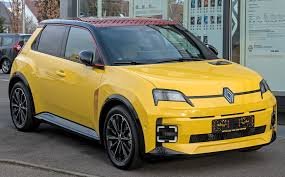
In the race for the future of mobility, the 5 E-Tech is one of Renault’s strongest cards: it’s not just an electric car, it’s a symbol — of heritage, change, and optimism.
Call to Action
- Want to build your own Renault 5 E-Tech? Visit Renault’s official configurator to explore trims, colors, and options.
- Thinking about leasing or buying? Check out local Renault dealers or EV incentives in your region.
- If you’re curious about real-world range, ask reviewers or EV owners in forums — their experience can help guide your choice.
- For EV-first timers: book a test drive to feel how instant torque and regenerative braking change the driving experience.
