

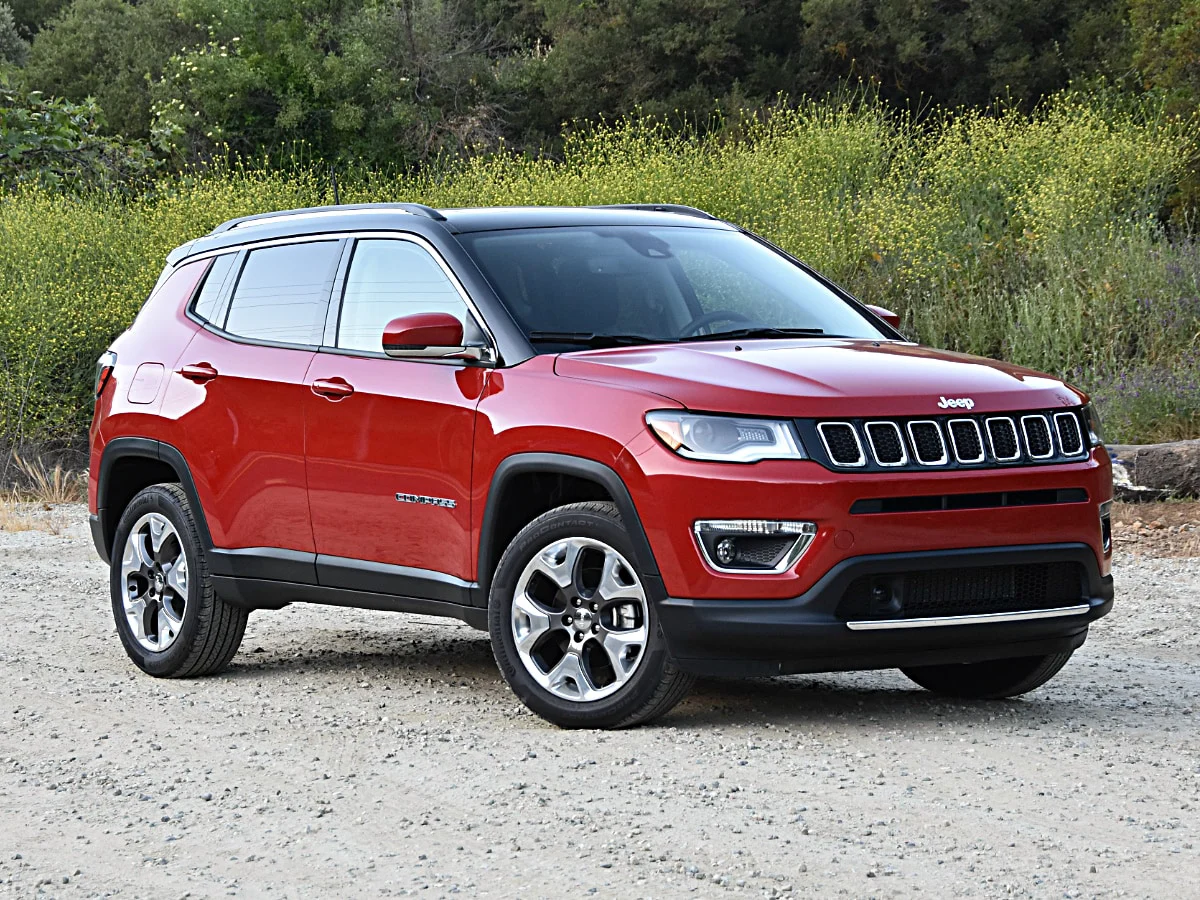
The Jeep Compass is a key model in Jeep’s global SUV lineup. Positioned between the compact Renegade and larger SUVs like the Cherokee, the Compass blends Jeep’s iconic off-road heritage with modern crossover practicality. Since its first launch, it has become a favorite among buyers looking for a premium compact SUV that can handle both city roads and rough terrain.

In this blog, we’ll explore the Compass in full detail — its evolution, tech, performance, safety, market variants, and where it’s headed next.
1. History and Evolution
1.1 Origins and First Generation
- The Jeep Compass concept first appeared in 2002 at the Detroit Auto Show. This concept featured a V6 engine, two doors, and all-wheel drive, giving a preview of Jeep’s small SUV ambitions.
- The production first-generation Compass launched in 2006 (2007 model year).
- Built on the Daimler-Chrysler / Mitsubishi GS platform (shared with the Patriot and Dodge Caliber), its structure allowed both front-wheel drive and full-time 4WD, with an optional CVT to simulate low-range gearing.
- Over time, Jeep added a Trail Rated badge to the model (after 2011) for versions with enhanced off-road capability.
1.2 Second Generation (2016 – present)
- The second-generation Compass debuted in September 2016 in Brazil and formally introduced in the U.S. soon after.
- This generation shifted to a modified platform shared with the Jeep Renegade (Small-Wide platform), which improved stiffness, lowered weight, and boosted efficiency.
- Jeep offered several trim levels: Sport, Latitude, Limited, and the off-road-oriented Trailhawk.
- Initial powertrains included a 2.4L Tigershark petrol engine in some markets (like the U.S.) and a 2.0-litre Multijet II diesel in markets like India.
- The second-gen Compass for India is built in Jeep’s Ranjangaon plant, Pune, and is also exported to several right-hand-drive markets.
1.3 Recent Updates & Third Generation
- In 2023–2024, Jeep introduced a refreshed Compass (MY24) in India with notable updates: a 9-speed automatic diesel (exclusive to India), a new front grille, new alloy wheels, and a special BlackShark edition
- For 2025, Jeep globally revealed the third-generation Compass, built on Stellantis’s STLA Medium platform.
- This new Compass will be offered in hybrid and fully electric versions, marking a significant shift toward electrification.
- Production for this new generation has begun at Stellantis’s Melfi plant in Italy.
2. Design and Exterior
2.1 Styling & Aesthetics
- The Compass retains classic Jeep styling cues: the seven-slot grille, strong wheel arches, and a muscular, upright SUV silhouette that reflects its off-road DNA.
- With facelifts and updates over the years, the Compass has adopted sharper lines, more modern headlights (LED in many variants), and refined bumpers for a premium look.
- In the MY24/2025 updates, the front grille insert has been redesigned, and new alloy wheel designs were introduced.
- The BlackShark edition brings a sporty, dark theme: gloss black grille, lower fascia, cladding, flares, and 18-inch black wheels with red accents.
2.2 Dimensions & Practicality
- According to spec sources, the Compass measures: 4,405 mm in length, 1,818 mm in width, and 1,640 mm in height, with a wheelbase of 2,636 mm.
- Ground clearance is around 178 mm, giving it decent capability over uneven terrain.
- Kerb weight is approximately 1,595 kg (depending on variant), which is fairly typical for a compact SUV.
- The design ensures a good balance of interior space and compact external footprint — useful for both city driving and occasional off-road use.
3. Powertrain & Performance
Jeep Compass – Features Table
| Category | Feature | Description |
|---|---|---|
| Engine & Performance | Engine Options | 2.0L Diesel / 1.4L Turbo Petrol (market-dependent) |
| Horsepower | 160–170 hp (varies by engine) | |
| Torque | 250–350 Nm | |
| Transmission | 6-Speed Manual / 7-Speed DCT / 9-Speed Automatic | |
| Drivetrain | FWD or AWD (4×4) | |
| Exterior | Body Style | Compact SUV |
| Wheels | 16″–18″ Alloy Wheels | |
| Lighting | LED Headlamps, DRLs & LED Tail Lamps | |
| Roof | Panoramic Sunroof | |
| Exterior Highlights | Signature Jeep Grille, Roof Rails | |
| Interior | Seating | 5-Seater |
| Upholstery | Fabric / Leatherette / Leather | |
| Dashboard | 10.2″ Digital Instrument Cluster | |
| Infotainment | 10.1″ Touchscreen with Uconnect | |
| Cargo Space | ~438 liters | |
| Comfort & Convenience | Climate Control | Dual-Zone Automatic Climate Control |
| Seats | Power Adjustable Driver Seat, Ventilated Seats (varies by trim) | |
| Keyless Features | Keyless Entry & Push-Button Start | |
| Additional Features | Wireless Charging, Rear A/C Vents | |
| Technology | Connectivity | Apple CarPlay, Android Auto, Bluetooth |
| Audio | 6-Speaker System / Optional Alpine 9-Speaker Setup | |
| Navigation | Built-in GPS Navigation | |
| Tech Highlights | 360° Camera (in higher trims) | |
| Safety | Standard Safety | ABS, ESC, Hill Start Assist, Multiple Airbags |
| Advanced Safety | ADAS, Lane Assist, Blind Spot Detection, Auto Emergency Braking | |
| Chassis | High-strength Steel Structure | |
| Fuel Efficiency | Mileage (Diesel) | ~15–17 km/l |
| Mileage (Petrol) | ~13–14 km/l | |
| Fuel Type | Petrol / Diesel |
3.1 Engine Options
- In markets like India, the long-standing engine has been a 2.0-litre Multijet II diesel, producing around 170 hp and 350 Nm of torque.
- Transmission options in India include a 6-speed manual and a 9-speed automatic (on certain 4×2 and 4×4 versions) for the diesel.
- The 2024 update introduced a 9-speed automatic (9AT) for the diesel 4×2 model — a first for this engine-transmission pairing in India.
- The global 2025 Compass (on the STLA Medium platform) expands the powertrain range to hybrid and full EV, aligning with broader EV trends.
- The 2.4-litre Tigershark petrol (used in earlier US models) was part of the second-generation offering, though it’s less common in current global markets.
3.2 Driving Dynamics
- The Compass delivers a balanced driving feel: capable in city traffic yet competent on highways, thanks to its torque-rich diesel engine (in regions where offered) and smooth automatic transmission.
- The 9-speed AT is tuned for smooth shifts and efficiency, offering better fuel economy while maintaining performance.
- Off-road capability comes in through Jeep’s Selec-Terrain system (in some variants), which includes different drive modes (auto, snow, mud, sand) to optimize traction.
- The Trailhawk version is especially rugged: raised suspension, off-road-focused tuning, and Jeep’s Trail Rated certification ensuring capability beyond the beaten path.
- Jeep claims strong build quality for rough terrain: the Trailhawk has completed challenging expeditions, such as crossing the Great Indian Desert over 1,280 km of road-free terrain.
4. Interior, Comfort & Technology
4.1 Cabin Design & Materials
- Inside, the Compass offers a refined cabin with a mix of soft-touch materials and rugged styling accents that reflect Jeep’s DNA.
- Premium variants may include leather upholstery, contrast stitching, and dual-tone interiors.
- A panoramic sunroof is available on higher-spec models, enhancing the feeling of space and light.
- The seating is designed for comfort with good headroom and legroom; the wheelbase helps balance passenger space and cargo capacity.
4.2 Infotainment & Connectivity
- Earlier models came with a 5-inch U-Connect infotainment on base variants and a 7-inch system on higher trims.
- In 2024 and onward, the Compass offers a 10.1-inch touchscreen, and in some trims, a 10.25-inch full-colour digital instrument cluster.
- The infotainment system supports wireless Apple CarPlay and Android Auto, thanks to the Uconnect 5 system.
- Additional features: wireless charging pad, voice recognition, and connected services (depending on market and trim).
4.3 Comfort & Utility Features
- Dual-zone climate control is available on many trims, helping maintain comfort for both front and rear occupants.
- Keyless entry and push-button start (“N Go” remote entry) are offered in mid-to-high trims.
- Storage options include several cup holders, door bins, and a reasonably sized boot for a compact SUV.
- Ride comfort is enhanced by Jeep’s suspension tuning: for the MY24, dampers (frequency selective dampers, hydraulic rebound stop) were revised for smoother ride quality.
5. Safety Features
5.1 Passive & Active Safety Systems
- Jeep has loaded the Compass with over 60 safety and security features in some markets.
- Airbags: Multiple airbags are standard, including front driver and passenger, side, and curtain airbags.
- Electronic systems:
- Electronic Stability Control (ESC) with electronic roll mitigation
- Hill Start Assist
- Anti-lock Braking System (ABS) with EBD
- Electronic Parking Brake (EPB) with auto-release when pulling away
- Rolling and rollover protection is enhanced by Jeep’s structure and roll mitigation systems.
- Rear safety: available Rear Cross Path Detection, Blind Spot Monitoring, and ParkSense® rear park assist help in tight parking.
- Adaptive Cruise Control, along with Full-Speed Forward Collision Warning with Active Braking, helps reduce crash risk.
- Reverse Parking Camera: A 360-degree park-view (on some variants) helps in maneuvering.
5.2 Crash Test Ratings & Safety Validation
- The Jeep Compass has earned a 5-star safety rating in Euro NCAP testing.
- According to user reviews (e.g., on CarDekho), customers also praise its safety features like 360-degree camera, multiple airbags, and robust build.
- Some regulatory scrutiny occurred: for 2019-2020 models, there was an NHTSA investigation into engine shutdowns due to coolant temperature alerts, but it was closed without a recall since the failure rate was low and the vehicles could be restarted safely.
6. Variants & Special Editions
6.1 Trim Levels (India)
In India, depending on the generation and model year, Jeep has offered several trim levels:
- Sport: Base trim; earlier offered with 1.4-liter petrol and 2.0-liter diesel.
- Longitude / Longitude (O): Adds features like a larger infotainment screen, keyless entry, roof rails.
- Limited: Premium trim; includes Selec-Terrain 4WD, leather seats, dual-zone climate, good safety equipment.
- Model S: A sporty top variant; newer versions come with AT and additional styling or feature enhancements.
- BlackShark Edition: Introduced in MY24, this edition emphasizes sporty looks and design, with red accents and gloss-black treatment.
- Anniversary Edition: Commemorates Jeep India’s milestone; features special accessories, colored grille embellisher, seat covers, and ambient lighting.
- Trailhawk / Trail Edition: Focused on off-road performance. The Trailhawk proved its mettle by completing a 1,280 km journey across the Great Indian Desert without touching tarmac.
6.2 Global Variants
- In global markets (e.g., U.S., Europe), the Compass has had other trims like Latitude, Latitude Lux, High Altitude, apart from the core ones.
- With the new generation: hybrid and EV versions are expected, broadening the Compass’s appeal to eco-conscious buyers. Reuters
7. Driving Experience & Off-Road Capability
7.1 On-Road Driving
- The Compass is well-suited for daily driving: its size is manageable in urban environments, while its torque provides confidence on highways, especially in diesel form.
- The 9-speed AT delivers smooth transitions, making city driving relaxed and long drives less tiring.
- The suspension tuning (especially after recent updates) is balanced: it soaks up road imperfections quite effectively without making the ride floaty.
- The steering feel is direct and responsive; many drivers appreciate its “Jeep character” — not overly soft but accessible for commuting.
7.2 Off-Road Capabilities
- The Trailhawk variant is the most off-road capable: higher ground clearance, special torque distribution, skid plates, and off-road drive modes (Selec-Terrain) make it genuinely competent for moderate terrain.
- Jeep’s Selec-Terrain system allows drivers to choose preset terrain modes (auto, snow, mud, sand) to optimize traction.
- During an expedition across the Great Indian Desert, the Trailhawk covered 1,280 km over dunes and rocky terrain, demonstrating its ruggedness and reliability.
- For typical Compass owners, even the non-Trailhawk versions offer a sense of ruggedness and stability on rougher roads, although they are not “extreme off-roaders.”
8. Ownership, Maintenance & Market Feedback
8.1 Ownership Experience
- Many owners praise the Compass for its premium feel, strong performance, and iconic Jeep styling. According to user reviews, safety features like advanced cameras and airbags are highly rated.
- However, some owners have raised concerns about cost of maintenance, spare parts price, and service center experiences.
- Reliability has been a mixed bag according to community feedback: while many enjoy the car, there are repeated mentions of electrical issues or parts being expensive / slow to procure.
- For some, investing in extended warranty and using authorized service centers is strongly advised to mitigate long-term maintenance risks.
8.2 Market Performance & Strategy
- In India, the Compass holds a “premium compact SUV” position — more expensive than mass-market crossovers but with strong brand appeal.
- Jeep uses special editions (like the BlackShark and Anniversary) to refresh interest and offer exclusivity.
- With the move to hybrid and EV (third-generation Compass), Jeep is aligning with global trends, potentially attracting eco-conscious buyers and fleet customers.
- Analysts note that production in Italy for the new Compass marks a strategic shift in Jeep’s manufacturing footprint.
9. Pros and Cons
Pros:
- Brand Heritage: Jeep’s iconic design and reputation give the Compass strong brand equity.
- Balanced Performance: Good torque, efficient diesel (in some markets), and smooth automatic transmission.
- Safety: Packed with active and passive safety features, 5-star Euro NCAP rating for many versions.
- Versatility: Adequate for both city commuting and light off-roading (especially Trailhawk).
- Modern Tech: Large touchscreen, digital instrument cluster, wireless Apple CarPlay/Android Auto, and advanced infotainment in newer models.
- Electrification Pathway: The upcoming hybrid and EV versions show Jeep’s long-term vision and adaptability.
- Special Editions: BlackShark and Anniversary editions provide exclusivity and aesthetic appeal.
Cons:
- Maintenance Cost: Higher service costs and part prices compared to more mass-market SUVs.
- Service Network: In some markets, service centers may be limited or experience delays in parts.
- Fuel Efficiency: In city driving, particularly with automatic or larger engine models, efficiency may not be class-leading.
- Back Seat Comfort: Some users report that rear seats aren’t the most comfortable for long journeys.
- Aging Platform: While the second generation has been updated, some critics argue it’s been on the same platform for a while (though this is addressed in the third-gen model).
- Resale Value: As with many premium SUVs, depreciation can be significant, especially if newer EV versions come in.
- Complexities with EV/Hybrid: For buyers interested in the new gen, upkeep, and charging logistics of EV/hybrid Compass could pose new challenges (as with any electrified vehicle).

10. Future Outlook
- The third-generation Compass, built on the STLA Medium architecture, is a pivotal moment for Jeep: it’s a leap into electrification.
- Hybrid and full-electric models will help Jeep address regulatory pressures and broaden market reach, especially in Europe and other EV-focused regions.
- Production in Italy suggests Jeep is streamlining its global manufacturing and possibly aiming to reduce dependence on import-heavy or less-efficient production lines.
- For markets like India, however, there’s uncertainty: some reports suggest Jeep may not bring the new generation Compass to India soon, which could lead to the phase-out of current models there.
- Continued use of special editions (like BlackShark) could help sustain interest until the full next-gen launch; additionally, residual values and demand for used Compass models may shift depending on how Jeep prices its hybrid/EV versions.
Conclusion
The Jeep Compass stands as a compelling choice in the compact SUV segment. It uniquely combines Jeep’s rugged DNA with modern urban sensibility. Over its life, it has evolved significantly — from the first-gen’s budget crossover to a more sophisticated, feature-rich second-generation, and now toward an electrified future.
- For adventurous drivers, the Trailhawk edition offers real off-road capability and the freedom to explore.
- For city-centric users, the Compass provides a premium feel, a spacious and comfortable cabin, and a suite of modern technology.
- For sustainability-oriented buyers, the upcoming hybrid and EV models represent a meaningful shift.
However, potential owners should weigh long-term costs: maintenance, parts, and the service network are vital considerations. If Jeep successfully launches its new gen in your market, it could become even more attractive — but until then, the current Compass remains a bold, capable, and stylish SUV.
