

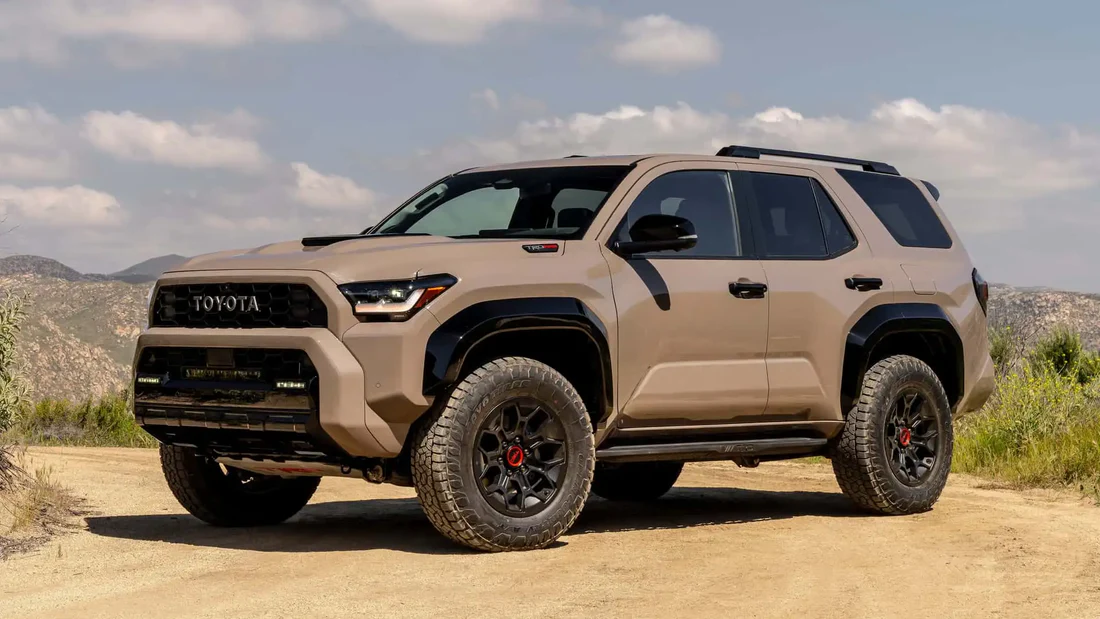
The Toyota 4Runner holds a special place in the world of SUVs. Revered for its ruggedness, longevity, and off-road capability, the 4Runner has earned a loyal following over decades. With the launch of the sixth-generation model for 2025, Toyota has reimagined this legend — combining the proven, body-on-frame toughness with modern powertrains, refined interiors, and updated technology. Whether you’re an adventure seeker or someone looking for a reliable daily driver, the 4Runner continues to deliver.

A Brief History of the 4Runner
The 4Runner debuted in the mid-1980s as a compact SUV version of the Hilux pickup. Over successive generations, it evolved into a mid-size, body-on-frame SUV built for both utility and off-road adventures. Known for its durability, the 4Runner was a favorite among overlanders and camping enthusiasts. Until 2024, the 4Runner stuck with its tried-and-tested V6 engine and classic rugged build. But history took a turn with the 2025 model — the first major redesign in over 15 years.
What’s New in the 2025 (Sixth-Generation)
The 2025 4Runner represents a completely new generation built on Toyota’s TNGA-F platform, shared with the Tacoma, Tundra, and Land Cruiser. This upgrade lays the foundation for better structural rigidity, improved ride quality, and modern architecture.
Key changes include:
- New powertrains: A 2.4L turbocharged inline-4 for the gas models, and an i-Force Max hybrid combining the same engine with an electric motor.
- More trims: Nine trim levels for 2025, including off-road-focused (TRD Off-Road, TRD Pro, Trailhunter) and luxury-focused (Limited, Platinum) variants.
- Modern interior and infotainment: Larger screens, digital gauge clusters, modern connectivity, and more comfort.
- Off-road hardware enhancements: Features like Multi-Terrain Select, Crawl Control, and stabilizer bar disconnect (on certain trims) make it more capable than ever.
Powertrain & Performance: Engine Options
Gasoline Engine
Toyota 4Runner – Features Table
| Category | Feature | Specification / Description |
|---|---|---|
| Engine & Performance | Engine Type | 4.0L V6 Petrol |
| Power Output | ~270 hp | |
| Torque | ~376 Nm | |
| Transmission | 5-Speed Automatic | |
| Drivetrain | RWD / 4WD (Selectable) | |
| Towing Capacity | Up to ~5,000 lbs (approx.) | |
| Exterior | Body Style | Mid-Size Body-on-Frame SUV |
| Headlights | LED Headlamps & DRLs | |
| Wheels | 17″–20″ Alloy Wheels | |
| Roof Options | Sunroof (higher trims) | |
| Off-Road Features | Skid Plates, Roof Rails, Optional TRD Upgrades | |
| Interior | Seating Capacity | 5 or 7 (depending on variant) |
| Upholstery | Fabric / SofTex / Leather | |
| Infotainment | 8″ Touchscreen Display | |
| Connectivity | Apple CarPlay & Android Auto | |
| Audio | 8-Speaker / Optional Premium Audio | |
| Comfort & Convenience | Climate Control | Automatic Climate Control |
| Seat Features | Power Adjustable Front Seats | |
| Comfort | Rear AC Vents, Multiple USB Ports | |
| Cargo Space | Large boot with fold-flat rear seats | |
| Safety | Safety Suite | Toyota Safety Sense (Pre-Collision, Lane Alert, etc.) |
| Airbags | Up to 8 | |
| Assist Systems | Blind Spot Monitor, Rear Cross-Traffic Alert | |
| Stability | Traction Control, Hill Assist, Crawl Control (off-road) | |
| Off-Road Capability | 4WD System | Part-Time 4WD with Low Range |
| Terrain Modes | Multi-Terrain Select | |
| Locking Differential | Available Rear Locking Differential | |
| Suspension | TRD Tuned Suspension (TRD trims) | |
| Dimensions | Length | ~4,850 mm |
| Width | ~1,925 mm | |
| Height | ~1,815 mm | |
| Ground Clearance | ~9+ inches (high clearance SUV) | |
| Special Trims | TRD Off-Road / TRD Pro | Off-road bumpers, lifted suspension, special wheels, enhanced capability |
The base engine for the 2025 4Runner is a 2.4-liter turbocharged inline-4 that delivers 278 hp and 317 lb-ft of torque. This replaces the older V6 and brings better efficiency and modern performance to the lineup.
- Transmission: 8-speed automatic.
- Structure: Rugged body-on-frame, control arms up front, and a live rear axle for durability.
- Fuel economy: According to Car & Driver’s test, the gasoline version achieved an observed ~ 18 mpg, while the EPA rating is around 21 mpg combined (20 city / 24 highway).
Hybrid (i-Force Max)
For those wanting both power and efficiency, the i-Force Max hybrid version packs a punch:
- Combined output: ~323 hp and 465 lb-ft of torque, according to Car & Driver.
- Transmission: Also uses the 8-speed automatic.
- Battery: Uses a nickel-metal hydride battery pack.
- Fuel economy: EPA estimates are around 23 mpg combined for the hybrid.
- Performance: Car & Driver measured a 0–60 mph time of ~6.7 seconds — impressive for a body-on-frame SUV.
Trim Levels & Pricing
The 2025 4Runner is offered in multiple trims to suit different needs. Here are some of the key trims and their highlights:
- SR5 (Base): Available in 2WD or 4WD. Basic but rugged, with cloth seats, 17-inch wheels, LED lights, roof rails.
- TRD Sport: Sport suspension, 20-inch wheels, a black hood scoop, 12.3-inch digital cluster.
- TRD Off-Road: Built for adventure — skid plates, 33-inch all-terrain tires, Bilstein shocks, Multi-Terrain Select, Crawl Control.
- TRD Pro: Premium off-road; Fox shocks, 33-inch tires, performance intake and exhaust, LED light bar, and more.
- Limited: More luxurious — 14-inch infotainment screen, 14-speaker JBL audio, power liftgate, leather (or faux leather), 4WD or 2WD.
- Platinum: Top-end luxury — head-up display, blacked-out styling, heated second row seats, rain-sensing wipers.
- Trailhunter: Designed for overlanders — Old Man Emu shocks, roof-rack, onboard air compressor, stabilizer bar disconnect, 33-inch tires.
Pricing Highlights (as per MotorTrend):
- SR5 2WD: ~$42,220
- TRD Off-Road Hybrid: ~ $53,440
- Platinum i-Force Max: Up to ~$64,310 depending on trim.
Exterior Design: Rugged Yet Refined
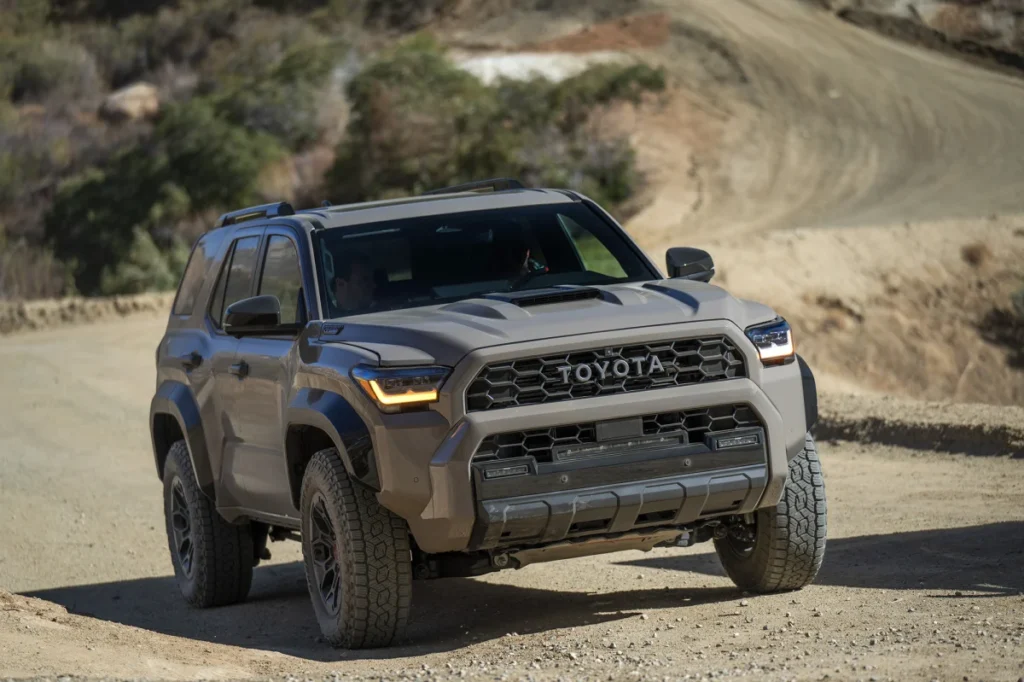
The 2025 4Runner retains its iconic, boxy SUV styling but gets a modern refresh:
- Strong, muscular lines: The design echoes its truck roots, with a bold grille, rugged bumpers, and pronounced wheel arches.
- Lighting: LED headlights, fog lights, and taillights are available in many trims, improving visibility and aesthetics.
- Wheels and tires: Depending on the trim, you get anything from 17-inch wheels (SR5) to 20-inch wheels (TRD Sport) or 33-inch all-terrain tires on off-road variants.
- Practical touches: Roof rails come standard on many trims, providing utility for racks, gear, and overlanding. carsdirect.com
Interior & Technology
Toyota has modernized the 4Runner’s interior for 2025 while keeping its rugged spirit.
- Cabin layout: Spacious and functional, with a strong emphasis on durability. Materials are rugged, yet higher trims bring softer, more premium surfaces.
- Infotainment: Depending on trim, you get an 8-inch or 14-inch touchscreen.
- Digital cluster: Many trims feature a 12.3-inch digital gauge cluster.
- Seating: Options vary from cloth in base models to SofTex or leather-like upholstery in higher trims.
- Comfort features: In Limited and Platinum trims, expect heated and ventilated front seats, power moonroof, and heated second-row seats (in Platinum).
- Cargo & practicality: The 4Runner’s rear cargo space remains a strong point. With its rugged build, it’s ideal for hauling gear, camping equipment, or adventure essentials.
- Connectivity: Modern connectivity features like Bluetooth, Android Auto, Apple CarPlay, and USB ports are standard or available, depending on trim.
Off-Road Capability
One of the 4Runner’s defining traits is its off-road prowess.
- Multi-Terrain Select: Lets drivers choose terrain settings (e.g., mud, rock, dirt) for optimized traction.
- Crawl Control: Helps maintain a consistent low speed over difficult terrain, making rock crawling or steep descents safer.
- Stabilizer Bar Disconnect Mechanism: On specific trims (like Trailhunter), this allows better wheel articulation off-road for maximum flexibility.
- Suspension: Off-road trims (like TRD Off-Road or Trailhunter) feature stronger shocks (e.g., Bilstein or Old Man Emu) and reinforced skid plates for underbody protection.
- Tires and Ground Clearance: Large all-terrain tires (33-inch) boost grip and clearance, helping the vehicle tackle rough terrain.
- Towing Capacity: The new 4Runner remains capable — while exact numbers vary by trim and powertrain, the platform’s design supports decent towing for adventure loads. (Note: for precise towing specs, check Toyota’s official documentation.)
Safety & Driver Assistance
Safety is a critical aspect of the new 4Runner:
- Toyota Safety Sense 3.0: Standard across trims, offering features such as pre-collision system, lane departure alert, adaptive cruise control, and more.
- Digital cluster and HUD: In higher trims like Limited and Platinum, a digital gauge cluster and head-up display enhance driver awareness.
- Robust structure: Thanks to the TNGA-F platform, the 4Runner’s body-on-frame architecture offers strength and crash protection.
- Recall awareness: There is a recent recall related to the instrument cluster – Toyota has recalled certain models, including 4Runner, due to a defect where the digital instrument panel may not display correctly at startup.
- Off-road safety: Features like Crawl Control, Multi-Terrain Select, and stable underbody help maintain control on challenging terrain.
Driving Experience: On-Road & Off-Road
On-Road Driving
- The 2.4L turbo engine offers decent power for city driving and highways, though it’s tuned more for torque than sportiness.
- Ride quality is improved compared to older generations, thanks to the modern platform, but it still feels like a truck more than a car.
- Fuel economy is better than the old V6, particularly in hybrid variants, though not as efficient as some crossover SUVs.
Off-Road Driving
- The 4Runner’s strong suit is its off-road capability. On TRD Off-Road, Trailhunter, or Pro trims, it feels very confident over rugged terrain.
- Articulation, ground clearance, and suspension travel make it competent for rock crawling, mud, or trails.
- With Crawl Control and Multi-Terrain Select, even less experienced drivers can tackle difficult terrain safely.
Hybrid Variant
- The hybrid variant offers a more refined driving experience: quick torque delivery, strong pulling power, and better fuel economy.
- During hybrid testing, Car & Driver recorded 0–60 mph in ~6.7 seconds — impressive for an SUV with overlanding ambitions.
- The hybrid also helps when towing or hauling, thanks to its higher torque figure (465 lb-ft), making it a practical yet capable choice.
Pros and Cons
Pros:
- Legendary Reliability: As with past 4Runners, the 2025 version is designed to last.
- Off-Road Mastery: Features like Crawl Control, Multi-Terrain Select, and robust suspension make it a trail-ready beast.
- Modern Powertrains: Turbo engine + hybrid option bring efficiency without compromising performance.
- Multiple Trim Options: From rugged off-road to luxury Platinum, there is a 4Runner for different needs.
- Strong Towing Capability: Suitable for trailers, bikes, or camping gear.
- Body-on-Frame Build: Offers durability and robustness not found in unibody crossovers.
- Advanced Safety Features: Standard Toyota Safety Sense, optional HUD, and reinforced frame.
Cons:
- Fuel Efficiency: Even with the turbo and hybrid, fuel economy lags behind modern crossovers.
- On-Road Comfort: It’s still truck-like — less refined ride than car-based SUVs.
- Price: Higher trims (especially hybrid or off-road) push the price into premium territory.
- Weight: The body-on-frame design adds weight, which affects agility.
- Maintenance Costs: Rugged off-road parts and hybrid complexity may increase long-term maintenance.
- Recall Concern: The recent instrument-cluster recall is something potential buyers should note.
- Mediocre MP3 / Audio (in some trims): According to some users, the base audio system isn’t class-leading. Reddit
Real User Feedback & Community Insights
- Many 4Runner fans praise its “bulletproof reliability” and ability to last for decades with proper care. > “The reliability of a 4Runner is legendary”
- Off-road enthusiasts love the new hybrid off-road trims. One user mentioned: > “Hybrid trims … have beefier CV axles … better metal skid plates …” for rugged trails.
- On the downside, some renters/users found highway driving tiring: > “After 300 miles it just sucks … it’s very loud … the infotainment … doesn’t have enough power.”
- Regarding trim decisions, a long-time SR5 owner said: > “I’ll probably be looking for my next vehicle … disappointed that I can’t get an SR5 with SofTex seats and a moonroof … seems like those days are gone.
These real-world perspectives highlight how different users value different aspects of the 4Runner — for some, reliability and off-road capability matter most; for others, interior comfort or modern amenities are crucial.
Competitors & Market Positioning
The 4Runner occupies a niche that few other SUVs can match perfectly:
Competitors:
- Ford Bronco: More rugged off-roading, two- and four-door options.
- Jeep Wrangler / Gladiator: Great off-road, but less refined for daily driving.
- Subaru Outback: More car-like, better on-road fuel economy but not true body-on-frame.
- Toyota Land Cruiser (or smaller Toyota SUVs): Premium, but much more expensive or larger.
4Runner’s Position:
- Ideal for buyers who want durability and off-road capability, with modern updates.
- Appeals to overlanders, campers, and adventure travelers.
- Also suitable for those who want a daily driver that’s rugged but not “just a truck.”
- The hybrid option helps bridge the gap between performance and fuel economy.
Use Cases: Who Is the 4Runner Best Suited For?
Here’s who the 4Runner is really good for — and when you might want to look elsewhere:
Best Fit For:
- Outdoor adventurers who need real off-road capability.
- Families who want a rugged SUV that can haul gear, tow a trailer, or take them off-grid.
- Long-term owners who value longevity and reliability.
- Commuters in places where ruggedness is beneficial
- Overlanders or campers wanting to build a weekend vehicle or expedition rig.
Maybe Look Elsewhere If:
- You care most about fuel economy: lighter, unibody crossovers will be more efficient.
- You want a luxury-level interior at a lower price: premium SUVs or crossovers may feel more refined.
- Daily highway driving is your only use: the 4Runner’s truck-like nature may feel less comfortable.
- You don’t need serious off-road features: some trims might be “too much” for paved roads.
- You want a third-row seat: though some older 4Runners had third-row options, the new 2025 lineup focuses on two rows.
Maintenance, Reliability & Resale
One of the biggest strengths of the 4Runner is its long-term reliability. Toyota’s proven platform, robust engine options, and strong resale value make the 4Runner a favorite for those looking for a vehicle that lasts.
- Maintenance: As with any body-on-frame SUV and especially hybrid variants, maintenance may be slightly higher, especially for off-road components or hybrid-specific parts.
- Reliability: 4Runners are known to rack up very high mileage with few major issues. Reddit and community forums often highlight users driving their 4Runners for 200,000+ miles. Reddit
- Resale: Because of its cult following and longevity, used 4Runners tend to hold value well.
- Warranty: Standard Toyota warranty applies; for hybrids, check for any additional coverage for the electric system.
Environmental Impact & Efficiency
- While a body-on-frame vehicle is not inherently the greenest, the hybrid 4Runner makes a strong case: the i-Force Max reduces fuel consumption while delivering high torque.
- Given its robust build, it’s likely to stay on the road for many years, which in a lifecycle analysis can be more sustainable than frequently replacing weaker vehicles.
- Toyota’s engineering ensures off-road capability without massively compromising on emissions or fuel efficiency when using the hybrid model.
SEO Angle: Why This Blog Is Valuable
For SEO, this blog can target multiple keyword clusters and content strategies:
- Core Keywords: “Toyota 4Runner”, “2025 4Runner”, “new 4Runner review”, “4Runner hybrid”
- Long-Tail Keywords: “2025 Toyota 4Runner off-road features”, “4Runner i-Force Max torque”, “is the 4Runner reliable”, “4Runner vs Bronco”, “4Runner towing capacity”
- Content Themes:
- Review: Performance, design, driving experience
- Comparison: Against competitors or older 4Runner generations
- Ownership: Reliability, maintenance, resale
- Adventure: Best for off-roading, camping, overland trips
- Local SEO: If a dealership or car blog is writing this, they can target “Toyota 4Runner in [City]”, “buy 4Runner in [State]”, or “2025 4Runner price in India/USA”.
By addressing multiple facets — specs, real-world use, pros and cons, off-road depth — the blog is optimized for both buyers (informational) and enthusiasts (led by features and performance).
Final Thoughts
The 2025 Toyota 4Runner represents a powerful evolution of the SUV icon. By introducing a turbocharged engine and a hybrid powertrain, Toyota has kept the spirit of the 4Runner alive while modernizing it for today’s drivers. With a strong suite of off-road hardware, multiple trim levels, and a body-on-frame build, the new 4Runner is more capable, versatile, and relevant than ever.
Whether you’re heading out on rugged forest trails, towing adventure gear, or simply looking for a reliable, long-lasting vehicle, the 4Runner offers a compelling mix of endurance, capability, and innovation. It remains a top choice for drivers who demand more than just daily utility — for those who dream of making every trip an adventure.
If you’re considering buying one, don’t forget to test drive different trims (especially the hybrid vs gas), check fuel consumption in your typical driving conditions, and assess which off-road features you actually need. And of course, compare with competitors like the Bronco, Jeep Wrangler, or Land Cruiser to see how the 4Runner stacks up in value and capability.
