

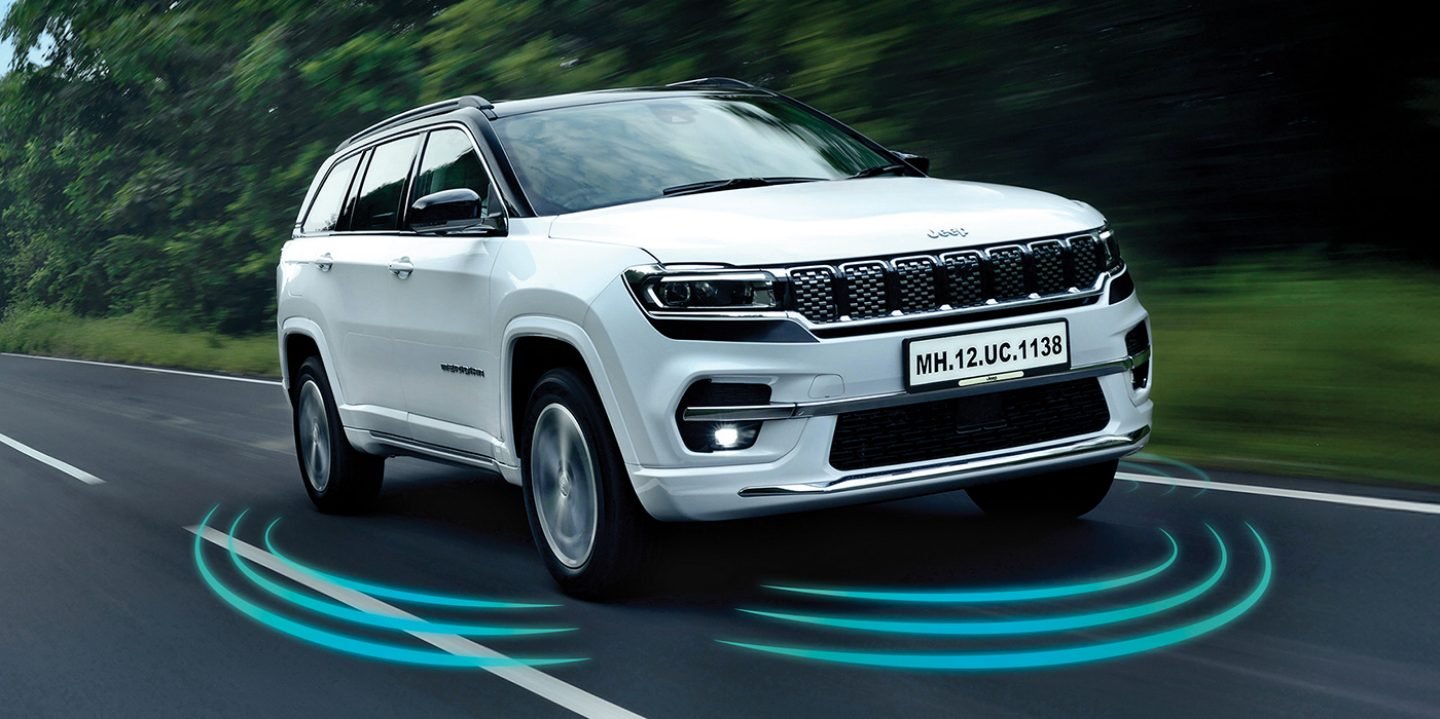
Jeep Meridian arrived as a strategic expansion of Jeep’s footprint in markets that wanted the brand’s rugged DNA in a more family-friendly, three-row package. Built on a proven platform and sharing much with the popular Compass, the Meridian isn’t merely a stretched Compass — it’s Jeep’s answer to families who want SUV practicality and presence without compromising on road manners, comfort, or tech. In this long-form blog I’ll walk you through everything that matters: design, packaging, interior comfort, engines and driving dynamics, tech and safety, ownership considerations, how it stacks up against rivals, and who the Meridian is actually for.

A short background: why the Meridian exists
Jeep’s global line-up covers a lot of territory — from small, city-friendly crossovers to purpose-built 4x4s. The Meridian slots into the gap between compact and full-size SUVs: it offers three rows in a relatively compact overall footprint, giving families a flexible, premium-feeling package without the bulk and running costs of a full-size SUV. In markets where roads, parking and fuel economy matter, this kind of “three-row compact” is very attractive. The Meridian leverages Jeep’s design language and perceived toughness while focusing on comfort, safety and usability.
Design and presence — familiar, but stretched the right way
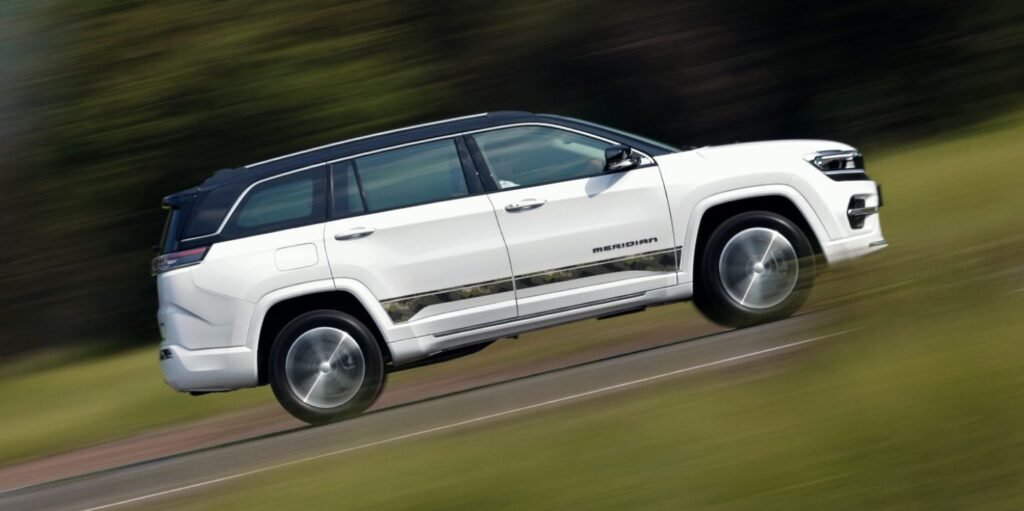
At a glance the Meridian looks unmistakably Jeep. The familiar grille, upright stance and muscular wheel arches deliver the brand’s signature presence. However, the designers have stretched proportions in all the right places: a longer wheelbase for more interior space, a taller roofline over the third row, and a tail treatment that emphasizes vertical cargo space rather than adopting the sloping coupé-like rear of many modern SUVs.
What works well:
- Proportions: The Meridian looks balanced; it doesn’t feel like a shoehorned three-row. The bonnet is long and the greenhouse is tall — practical cues that also help visibility.
- Details: Chrome highlights, roof rails, projector or LED headlamps (depending on trim) and sturdy-looking skid plates give it a premium-but-capable tone.
- Practicality cues: A squared-off tailgate and relatively low loading lip make it easy to load luggage — very family-friendly.
The design isn’t polarizing; it’s confident and mature. It signals capability without screaming “off-roader” in a way that would alienate urban buyers.
Interior: family-first layout, premium touches
The Meridian’s interior focuses on usable space and comfort. Where many three-row SUVs force compromises on the second and third rows, the Meridian aims to be genuinely usable for adults on short-to-medium journeys and very comfortable for children.
Jeep Meridian – Features Table
| Category | Feature | Specification / Description |
|---|---|---|
| Engine & Performance | Engine Options | 2.0 L Turbo Diesel / 1.3 L Turbo Petrol (market dependent) |
| Power Output | ~170 hp (Diesel) / ~150 hp (Petrol) | |
| Torque | ~350 Nm (Diesel) / ~270 Nm (Petrol) | |
| Transmission | 6-Speed Manual / 6-Speed Automatic | |
| Drivetrain | Front-Wheel Drive (FWD) | |
| Fuel Efficiency | Diesel Efficiency | ~12–14 km/l (estimated) |
| Petrol Efficiency | ~14–16 km/l (estimated) | |
| Exterior | Body Style | 3-row Mid-Size SUV |
| Wheels | 17″–18″ Alloy Wheels | |
| Lighting | LED Headlights and DRLs | |
| Roof | Roof Rails; Optional Sunroof | |
| Interior | Seating Capacity | 6 or 7 seats (depending on seating config) |
| Upholstery | Fabric / Leatherette Options | |
| Dashboard | Digital-Analog Instrument Cluster | |
| Infotainment | 10.1″ Uconnect Touchscreen | |
| Connectivity | Apple CarPlay & Android Auto | |
| Cargo Space | ~233 L (7-seater) / ~500+ L (with 3rd row folded) | |
| Comfort & Convenience | Climate Control | Tri-Zone Automatic Climate Control |
| Seats | Power Adjustable Front Seats; Rear AC Vents | |
| Key Features | Keyless Entry, Push-Button Start | |
| Safety & Driver Assistance | Airbags | 6 to 7 Airbags (varies by trim) |
| Stability Systems | ABS, ESC, Traction Control | |
| Driver Aids | Rear Parking Sensors, Rear Camera | |
| Suspension & Handling | Front Suspension | Independent (MacPherson) |
| Rear Suspension | Multi-Link Setup | |
| Steering | Electric Power Steering | |
| Dimensions | Length | ~4,855 mm |
| Width | ~1,860 mm | |
| Height | ~1,732 mm | |
| Wheelbase | ~2,798 mm |
Key interior elements:
- Seating layout and materials: The Meridian typically offers a 2–3–2 seating arrangement in higher trims (captain’s chairs or a three-seat bench depending on the variant). Higher trims will usually have leatherette or leather upholstery and electrically adjustable front seats; mid-specs get cloth or premium fabric with manual adjusters.
- Space and ergonomics: The extended wheelbase delivers noticeable legroom in the second row. The third row is best suited for children or occasional adult use — for long highway journeys adults will find legroom and shoulder room a bit tight, but for school runs, weekend trips and shorter outings it’s perfectly serviceable.
- Storage and practicality: Thoughtful cubbies, door pockets, twin gloveboxes, and a reasonably deep boot (with the third row folded) make daily life easy. The Meridian often includes convenient features such as 60:40 split-folding seats, underfloor storage and multiple USB charging ports across rows.
- Climate and comfort: Multi-zone climate control with dedicated blowers and vents for rear passengers helps keep the cabin comfortable. A panoramic sunroof is available on higher trims and adds to the sense of space and light.
- Build and finish: Jeep tends to use a mix of soft-touch materials up-front with durable plastics in lower, high-wear areas. The overall impression is of a solid, well-assembled cabin that prioritizes tactile quality and longevity.
Infotainment and connectivity — modern, simple, effective
The Meridian’s infotainment package aims to balance modern convenience with easy-to-use interfaces. Expect a large touchscreen in the centre stack, smartphone integration (Apple CarPlay and Android Auto), Bluetooth, USB-A/C ports and a decent audio system. Higher trims often add navigation, wireless phone projection, premium sound and additional connectivity features like Wi-Fi hotspot capability.
Practical notes:
- The touchscreen is placed to be easily reachable from both front seats.
- Physical buttons and knobs for climate and key functions keep daily use simple — a nice touch for drivers who dislike diving into menus while on the move.
- Multiple charging sockets and rear USBs are well thought through for family use.
Engines and transmissions — tuned for usability
Rather than chasing headline-grabbing power figures, the Meridian’s powertrains are tuned for smooth, predictable performance and fuel economy — traits families appreciate.
Typical characteristics:
- Engine choices: Markets often receive both petrol and diesel options (depending on local demand and emission norms). These engines are tuned to deliver good mid-range torque for effortless overtaking and relaxed cruising — important for motorway journeys with a full load.
- Transmission choices: Expect manual and automatic alternatives in lower and mid trims, while higher trims favour automatic gearboxes for ease of use in city traffic. Automatic units focus on smooth shifts and low vibration rather than ultra-aggressive sportiness.
- Real-world performance: The Meridian is happiest as a highway cruiser. With a full complement of passengers, the engine and gearbox are aimed at keeping revs modest and delivering adequate overtaking performance without excessive noise.
I avoid listing specific power figures because they vary by market and model year. If you want exact specs for a particular country or variant I can fetch those for you.
Driving dynamics — comfortable, composed, confidence-inspiring
On the road the Meridian leans into comfort-first dynamics with a suspension setup that soaks up bad tarmac and isolates the cabin from road imperfections. Steering is weighted for calmness rather than sharp steering feedback, which suits long journeys and relaxed urban driving.
Important driving impressions:
- Ride comfort: The suspension is biased towards compliance, making it excellent for family travel across mixed road surfaces.
- Handling: It’s not a corner-carver, but it remains composed through bends thanks to its chassis tuning and reasonably low centre of gravity (for a three-row family SUV).
- Refinement: Sound insulation is decent — wind and tyre noise are managed well, though diesel variants can transmit more NVH under hard acceleration.
- Off-road capability: The Meridian is not a hardcore off-roader. It inherits some Jeep traits — a confident driving position, tough-looking underbody elements and good approach angles — but it’s primarily a road-focused vehicle. If you want serious off-roading, look to Jeep’s more dedicated 4×4 models.
Safety — family-focused and comprehensive
Jeep equips the Meridian with a modern safety suite designed to protect occupants in the common accident scenarios and to help avoid them in the first place. Typical offerings include multiple airbags, ABS with EBD, stability control systems, traction control, hill-start assist, ISOFIX anchors for child seats, tyre pressure monitoring, and a rear-view camera with parking sensors.
Higher-spec variants often add:
- Advanced driver assistance systems (ADAS) such as lane-keeping assist, adaptive cruise control, blind-spot monitoring and autonomous emergency braking.
- Additional active safety features that support highway driving and reduce fatigue.
A few practical points: ADAS systems can be highly useful on long runs, but they’re supplements — not substitutes — for attentive driving. Always check which safety features are standard and which are optional on the trim you choose.
Ownership, running costs and practicality
For family buyers, running costs and ownership experience matter as much as showroom spec.
- Fuel economy: Expect reasonable economy for the class — diesel variants typically offer better long-distance efficiency while petrols are smoother and quieter in city use. Exact figures vary by engine, transmission and driving style.
- Maintenance and service: Jeeps usually command slightly higher servicing costs than mainstream brands, but local dealership networks and service packages (extended warranties, periodic maintenance plans) can mitigate ownership costs. Parts quality, build robustness and resale values vary by market and depend on how widely Jeep models are adopted locally.
- Resale: Jeep’s brand cachet helps resale values in many markets, especially where the brand is perceived as premium. However, maintenance history and market demand for three-row compacts will influence resale significantly.
- Practicality: Regular family features — fold-flat seats, generous storage, multiple charging points and easy third-row access — make the Meridian a sensible daily driver and holiday companion.
Variants and pricing — choose what fits your life
The Meridian is typically offered in a spread of trims so buyers can prioritise essentials or go all-out with premium features. Lower trims are sensible and well-equipped for daily use, while higher trims add comfort and tech niceties. There are often two important decisions to make:
- Engine choice: Diesel for long-distance efficiency and towing; petrol for quieter, cleaner city operation.
- Trim level: Essential trims keep ownership costs in check; premium trims improve convenience, comfort and safety.
Pricing will depend heavily on the market, taxes, options and updates — if you’d like a price estimate for your country/trim, tell me the market and I’ll fetch local numbers.
Competitors — where Meridian sits in the shop
The Meridian competes with other premium-ish three-row compacts and stretched compact SUVs from both mainstream and near-luxury brands. Typical rivals include models that prioritise family comfort, tech and value-for-money. The comparative strengths of the Meridian are its brand image, interior packaging and on-road refinement; rivals may undercut on price or offer larger third rows, while others may be more economical to run.
If you’re weighing options, compare:
- Interior space and usability (real-world third-row comfort).
- Safety and ADAS list.
- Running costs and local service network.
- Resale value and warranty offerings.
Who should buy the Meridian?
The Meridian is a strong choice if you:
- Want a three-row SUV for family life but don’t want the size and fuel costs of a full-size model.
- Value a premium badge and confident road presence.
- Need a comfortable, composed highway cruiser with usable third-row space for kids or occasional adult passengers.
- Appreciate modern infotainment, practical storage solutions and decent safety equipment.
The Meridian may not be ideal if:
- You need a full-size third row for regular adult use on long trips.
- You demand serious off-road capability — there are better purpose-built 4x4s in Jeep’s lineup for that.
- Absolute lowest running cost or cheapest purchase price is your top priority — some rivals or mainstream brands may undercut the Meridian on price.
Buying tips — choose smart
A few practical tips if you’re serious about buying:
- Test-drive with a full load: Bring family members or simulate a full load to evaluate real-world comfort and visibility.
- Check trim-level inclusions: Decide whether you need ADAS, panoramic roof, or premium audio — these can be optional and add cost.
- Compare service packages: Dealers frequently offer maintenance bundles or extended warranties that can reduce long-term servicing uncertainty.
- Consider resale: Ask local dealers about historical resale for Jeep models in your region.
- Look at real ownership forums: Owner communities reveal practical concerns (e.g., minor niggles, maintenance experiences) that spec sheets won’t show.
