

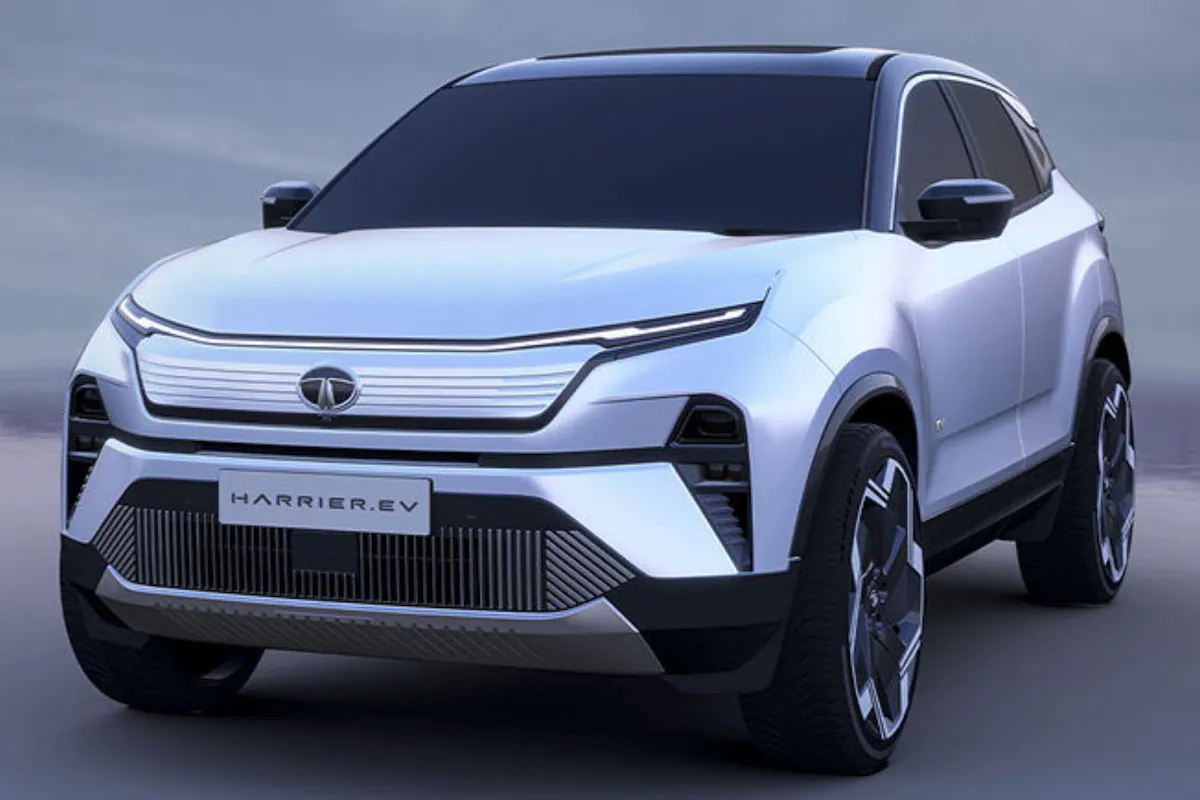
Tata Motors has ushered in a new era for its SUV lineup with the launch of the Tata Harrier.ev. This electric version of the popular Harrier is packed with tech, performance, and the brand’s bold design DNA — all while aiming to address range anxiety and drive innovation in the EV space. In this blog, we’ll explore every angle: design, performance, features, pricing, and more.
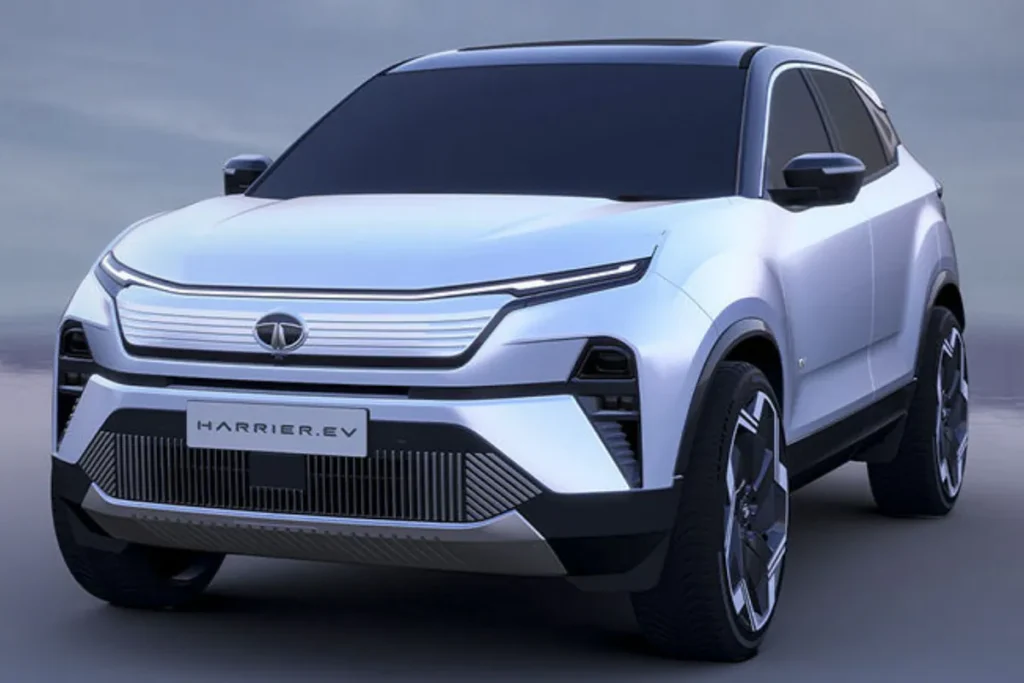
Table of Contents
- Introduction
- Design & Styling
- Platform & Architecture
- Performance & Powertrain
- Battery, Range & Charging
- Driving Modes & Off-Road Capabilities
- Interior, Infotainment & Technology
- Safety & Driver Assistance
- Variants & Pricing
- Real-World Feedback
- Challenges & Considerations
- Why It Matters for India’s EV Future
- Conclusion
1. Introduction
Tata Motors officially commenced production of the Harrier.ev in July 2025 at its Pune plant. Tata Motors With deliveries beginning soon after, this EV is positioned as one of the most capable electric SUVs in the Indian market.
Built on platform, the Harrier.ev brings both rear-wheel drive (RWD) and all-wheel drive (AWD) options — the latter being a first for a Tata mass-market EV. Let’s unwrap what makes this EV a game-changer.
Tata Harrier.ev – Features Table (Clean Version)
| Category | Feature | Specification / Description |
|---|---|---|
| Powertrain | Motor Setup | Dual-motor Quad-Wheel Drive (QWD) |
| Power Output | Front: ~158 PS, Rear: ~238 PS | |
| Battery & Range | Battery Capacity | 75 kWh |
| Range | ~480–505 km real world, ~627 km claimed | |
| Fast Charging | ~250 km added in ~15 minutes | |
| Drive & Terrain | Terrain Modes | Normal, Grass/Snow, Mud/Gravel, Sand, Rock Crawl, Custom |
| Off-Road Assist | Enhanced traction control | |
| Suspension | Type | Frequency-dependent dampers (“Ultra-Glide” suspension) |
| Safety | Airbags | 7 airbags |
| ADAS | Level 2 autonomous features (20+ functions) | |
| Assistance | Hill Hold, Hill Descent Control, ESP, TPMS | |
| Cameras & Visibility | Surround View | 540° view (360° + transparent view) |
| Mirror | HD digital rear-view mirror with DVR | |
| Infotainment | Touchscreen | 14.53″ QLED display |
| Instrument Cluster | 10.25″ full-digital cluster | |
| Audio | 10-speaker JBL with Dolby Atmos | |
| Connectivity | Wireless CarPlay/Android Auto, voice assistant | |
| Convenience | Parking Tech | Auto-park, e-valet, reverse assist |
| Access | Digital key, NFC card key, phone key | |
| Roof | Panoramic sunroof with mood lighting | |
| Storage | Boot Space | 502 L (expandable over 1,100 L) |
| Frunk | ~67 L | |
| Electric Utility | V2L | Power external appliances |
| V2V | Charge another EV | |
| Interior | Ambient Lighting | Multi-color ambient lighting |
| Seats | Ventilated front seats | |
| Build | Structure | 5-star safety-ready architecture |
2. Design & Styling
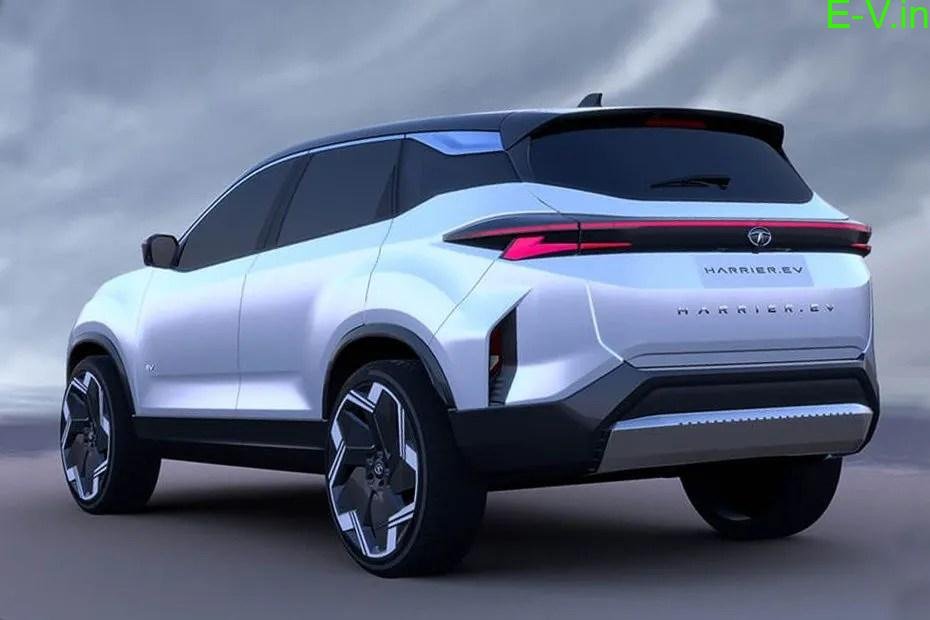
- The Harrier.ev retains the muscular silhouette of its ICE counterpart, but with EV-specific touches like a closed-off grille, reimagined bumpers, and aero-optimized turbine-blade alloy wheels.
- Lighting is futuristic: sleek LED DRLs, bi-projector headlamps, sequential turn indicators, and connected tail lamps.
- Additional design elements include auto-folding ORVMs that project the “Harrier” logo, puddle lamps, and welcome/charging animations.
- Colour options are bold: Nainital Nocturne, Empowered Oxide, Pristine White, and Pure Grey.
- There’s also a Stealth Edition for those who want a darker, more aggressive look.
The design clearly reflects Tata’s ambition to combine rugged SUV appeal with modern electric aesthetics.
3. Platform & Architecture
- The Harrier.ev is built on the acti.ev+ architecture, which is a next-gen EV platform designed to support both RWD and AWD configurations.
- Structurally, it draws from Tata’s SUV DNA with a monocoque chassis.
- Suspension-wise, there’s multi-link setup with FDD (Frequency Dependent Damping) shock absorbers, which promises a refined ride.
This architecture supports both performance and practicality — especially when you consider the off-road capability built into the Harrier.ev.
4. Performance & Powertrain
- The Harrier.ev will be available in dual powertrain options:
- Rear-Wheel Drive (RWD) — a single motor on the rear axle.
- Quad-Wheel Drive (QWD) — a dual-motor setup, one on each axle, enabling AWD.
- For the AWD variant, peak torque is claimed to be around 500 Nm.
- In terms of power, reports suggest up to 396 PS (roughly 390 bhp) for the top-spec dual-motor version.
- Acceleration: Tata claims a 0-100 km/h time of about 6.3 seconds for the higher-performance variant.
That’s serious performance for an EV SUV in this segment — especially with the quad-wheel-drive version.
5. Battery, Range & Charging
- Two battery pack options: 65 kWh (for RWD) and 75 kWh (for AWD).
- Claimed range for the top variant is 627 km (MIDC).
- Real-world target range, according to Tata, is around 500 km, which addresses range anxiety quite well.
- Charging and energy usage features:
- Vehicle-to-Load (V2L): use the Harrier.ev’s battery to power external devices.
- Vehicle-to-Vehicle (V2V): share or supply power to another EV.
6. Driving Modes & Off-Road Capabilities
One of the standout parts of the Harrier.ev is its versatile drive modes and terrain capability:
| Mode Category | Modes/Features |
|---|---|
| Drive Modes | Eco, City, Sport, Boost |
| Terrain Modes | Six multi-terrain modes: Normal, Mud/Ruts, Rock Crawl, Sand, Snow/Grass, Custom |
| Regeneration | Multi-level regen with paddle shifters for more control. |
| Special Features | – Off-road Assist (Traction – Drift Mode for sporty driving (likely for the performance variant) |
These modes — especially terrain-focused ones — make the Harrier.ev more than just a city cruiser. It’s built to handle tougher terrain with confidence.
7. Interior, Infotainment & Technology
- Infotainment: A massive 14.53-inch Samsung Neo QLED touchscreen anchors the dashboard.
- Instrument Cluster: 10.25-inch fully digital display for driver info.
- Connected Car Features:
- iRA.ev super app suite <br>
- Cloud architecture with Arcade.ev app integration.
- Digital key: uses UWB (Ultra-Wideband), BLE, and NFC.
- In-car payments: “DrivePay,” enabling UPI-based payments from within the car.
- Convenience Features:
- e-Valet (autonomous park assist) and Summon Mode (move the car forward/backward using the key fob).
- Transparent Mode: 540° surround view system + 3D camera, giving a virtual “see-through” bonnet view.
- Audio: Powerful JBL Black 10-speaker system with Dolby Atmos.
- Comfort: Panoramic sunroof, dual-zone auto climate control, multi-colour ambient lighting, power/ventilated front seats.
8. Safety & Driver Assistance
Safety has been a strong pillar for Tata, and the Harrier.ev brings a robust package:
- Airbags: 7 (6 standard + knee airbag).
- ADAS (Level 2): Over 20 features, including:
- Lane Keep Assist, Adaptive Steering Assist, Lane Centering, Adaptive Cruise Control, Autonomous Emergency Braking, Forward/Rear Collision Warning, Traffic Sign Recognition, High Beam Assist, etc.
- Surrounding View: Transparent Mode with 540° Clear View Assist + 360° 3D camera.
- Vehicle Dynamics & Safety:
- Electronic Stability Program (ESP) with i-VBAC (improved vehicle balance)
- Hill Descent Control, Hill Hold Assist.
- Tyre Pressure Monitoring System (TPMS), rain-sensing wipers, auto headlamps.
- Others: HD e-IRVM (digital rear-view mirror) with dashcam and recording, SOS call feature, Acoustic Vehicle Alert System (AVAS).
9. Variants & Pricing
- Launch Price: Starts at ₹ 21.49 lakh (ex-showroom) for the base variant.
- Battery Variants:
- 65 kWh (RWD) <br>
- 75 kWh (dual motor AWD)
- Stealth Edition: A premium variant for the 75 kWh battery, priced from ₹ 28.24 lakh (ex-showroom).
- Colour Variants: Four regular options + special visual identity for the Stealth Edition.
10. Real-World Feedback
While this EV is just hitting the roads, early owner feedback and user reports already offer valuable insights:
- A user on Reddit shared a highway trip from Bangalore to Coorg, noting “smooth and surprisingly fun to drive” with 480–520 km real-world range in mixed driving.
- Another owner reported that after charging to 100%, they covered 328 km with 20% battery remaining — suggesting a more conservative, real-world usable range.
- As for reliability, some users have flagged concerns: “It was broken down 5 times in just 3 months … every time vehicle was towed … service centre … said they were working with TATA Motors to resolve the issue.”
These insights underscore that while the Harrier.ev is impressive on paper, real-world usage may vary (as with any EV).
11. Challenges & Considerations
Despite its strengths, Harrier.ev does face a few potential challenges:
- Infrastructure Dependency: As with all EVs, usability will depend heavily on India’s charging infrastructure. While Tata is expanding its network, public charging is still uneven.
- Real-world Range vs. Claimed: The 627 km MIDC claim is optimistic — real-world use (traffic, AC, terrain) could reduce this significantly, as some early users report.
- Cost of Ownership: While the EV promises lower running costs, the higher initial price (especially for the 75 kWh AWD variant) may be a deterrent for some buyers.
- Service & Support: More frequent service issues reported by a few users may raise concerns about after-sales support, especially for new tech-heavy EVs.
12. Why It Matters for India’s EV Future
The Harrier.ev is not just another EV — it’s a strategic milestone for Tata and the broader EV ecosystem in India:
- Massive EV Ambition: Tata continues to expand its EV portfolio, and the Harrier.ev adds a strong, premium, long-range SUV to its lineup.
- AWD in Mass Market: By offering a quad-wheel drive EV, Tata is bringing a performance and capability dimension that few EVs in India currently offer.
- Safety Leadership: With ADAS Level 2, 7 airbags, and 540° surround view, the Harrier.ev raises the bar for EV safety in India.
- EV Ecosystem Push: Tata’s Open Collaboration 2.0 initiative aims to set up 400,000 public charging points by 2027, which underscores how seriously they view EV adoption.
- Sustainable Innovation: Features like V2L, V2V, digital payments (DrivePay), and a connected architecture (Arcade.ev) all hint at how EVs are becoming platforms — not just modes of transport.
13. Conclusion
The Tata Harrier.ev represents a bold leap for Tata Motors and the Indian EV industry. With its long-range potential, dual-motor AWD option, rich set of features, and strong safety credentials, it’s poised to be a flagship in Tata’s EV lineup.
That said, early buyer feedback suggests that real-world use may present some trade-offs — as is natural with any complex new-technology vehicle. But for those looking for a powerful, premium electric SUV that doesn’t compromise on performance or capability, the Harrier.ev is shaping up to be a very compelling choice.
SEO & Readability Notes
- Keywords focused: “Tata Harrier EV”, “Harrier.ev”, “Tata electric SUV”, “Harrier EV range”, “Tata EV India”
- Headers: Organized with H2/H3 structure for better scannability
- Meta description suggestion: “Discover the all-new Tata Harrier.ev — from design, performance, and range to safety features, variants, and real-world user feedback. A complete guide to Tata’s flagship electric SUV.”
- Internal linking ideas: Link to related blogs on Tata Nexon EV, EV charging in India, or Tata’s EV strategy
