

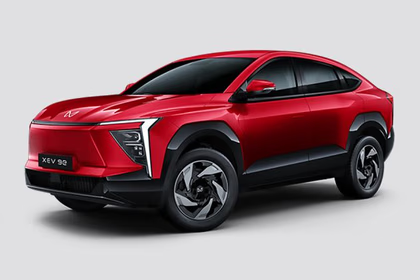
Mahindra’s XEV 9e arrived on the Indian EV scene to challenge the commonly held belief that premium electric SUVs must come only from global brands. With a “ground-up” electric architecture, strong real-world range claims, and a spec sheet that brings luxury and performance into reach, the XEV 9e is one of the most talked-about EVs in India. This blog unpacks everything you need to know — from tech and range to pricing, safety, driving feel, and whether it’s worth considering today.
Quick snapshot (TL;DR)
- Type: Electric flagship e-SUV built on Mahindra’s INGLO architecture.
- Battery options: 59 kWh and 79 kWh LFP packs.
- Price (India): Starts around ₹21.90 lakh (ex-showroom); top variants up to ~₹30–31 lakh depending on pack and trims.
Why the XEV 9e matters
Mahindra’s XEV 9e is notable for three reasons:
Mahindra XEV 9e – Features Table
| Category | Feature | Specification / Description |
|---|---|---|
| Powertrain | Motor & Layout | Rear-mounted permanent-magnet synchronous motor |
| Power Output | ~228 kW (59 kWh) / ~210 kW (79 kWh) (~231 hp / ~282 hp) | |
| Torque | ~380 Nm | |
| Transmission | Single-speed automatic | |
| Battery & Range | Battery Options | 59 kWh / 79 kWh LFP (Blade) |
| Range | ~542 km (59 kWh) / ~656 km (79 kWh) (MIDC) | |
| Charging | 7.2 or 11.2 kW AC, up to ~175–180 kW DC fast charging | |
| Performance | Acceleration | ~0–100 km/h in ~6.8 seconds |
| Dimensions & Capacity | Length × Width × Height | ~4,789 mm × ~1,907 mm × ~1,694 mm |
| Wheelbase | ~2,775 mm | |
| Seating | 5 seats | |
| Cargo Space | ~663 L boot | |
| Suspension & Steering | Front Suspension | MacPherson Strut + Stabilizer Bar |
| Rear Suspension | Multi-link (5-link) + Stabilizer Bar | |
| Steering | Electric Power Steering with Variable Gear Ratio | |
| Turning Radius | ~10 m | |
| Brakes | Braking System | Disc brakes (front and rear) + Brake-by-wire |
| Safety | Crash Rating | 5-star Bharat NCAP |
| Airbags | Up to 7 airbags | |
| ADAS / Driver Assistance | Level 2+ ADAS with multiple radars + cameras | |
| Other Safety Features | Traction Control, Hill Hold, Electronic Stability Control | |
| Infotainment & Connectivity | Screens | 3 × 12.3″ (driver + center + passenger) |
| Head-Up Display | AR-based VisionX HUD | |
| Connectivity | 5G, Wi-Fi 6, Bluetooth 5.2, Cloud updates | |
| Chipset | Qualcomm Snapdragon (for cockpit domain) | |
| Comfort & Convenience | Ambient Lighting | 16 million color ambient lighting (“Light Me Up”) |
| Key Features | Keyless entry, push-button start | |
| Drive Modes | Range, Everyday, Race (and more) | |
| Regeneration | Multiple regen levels + one-pedal drive | |
| Other Features | Frunk | Front storage compartment (~150 L) |
| Safety / Parking | 360° camera, parking sensors, auto park | |
| Sound System | Harman Kardon (top trims) |
- Homegrown electric origin architecture (INGLO): Designed specifically for EVs rather than converted from ICE platforms — this allows for better packaging, lower center of gravity and optimized range and interior space.
- Competitive specs at competitive prices: Offering long-range battery options, high power output and advanced tech (ADAS, multi-screen cabin experiences), Mahindra has positioned the XEV 9e to compete with global EVs while keeping costs comparatively lower.
- Safety and features: From multiple airbags and ADAS to structural safety scores reported in crash assessments, Mahindra has emphasised safety as a selling point.
These three points make the XEV 9e more than just another EV — it’s a strategic product that signals Mahindra’s intent to be a serious global EV contender.
Exterior and design language
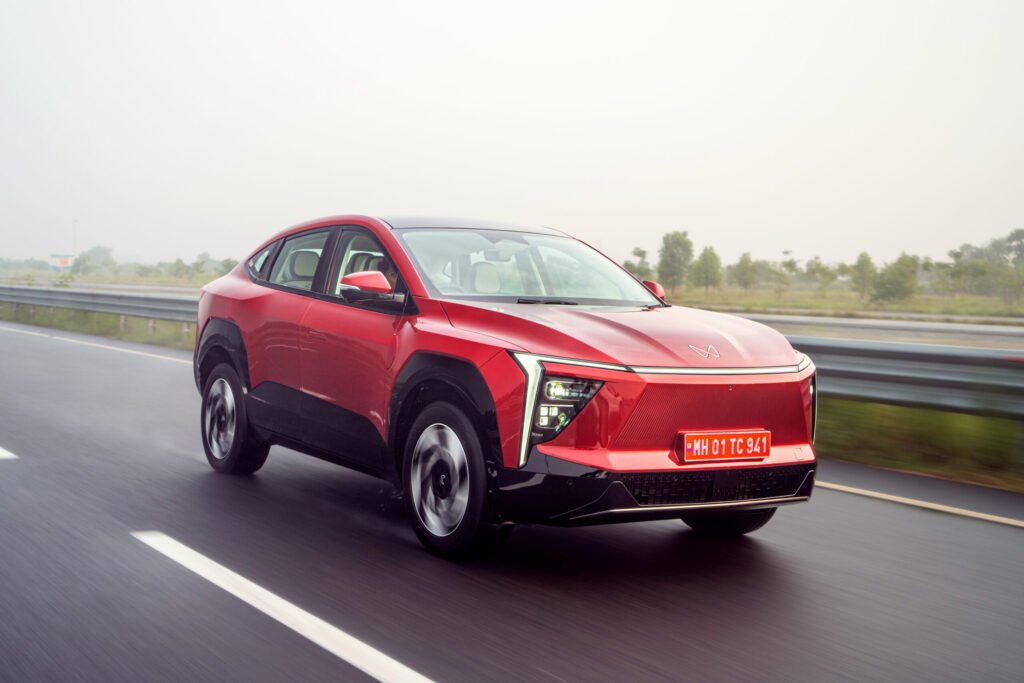
The XEV 9e uses bold, modern SUV cues: strong shoulder lines, a coupe-like roof taper, sharp LED lighting signatures and a muscular stance. The design mixes aero-efficiency with premium detailing (flush-fit door handles, digital lighting elements), reflecting the class the car aims to play in. The packaging benefits of an EV platform are visible in the long wheelbase and short overhangs — which translates to roomy interiors and a large boot.
Practical takeaways:
- Urban presence with highway stability (low center of gravity).
- Seen as visually competitive against vehicles like the Ioniq 5 and other mid-to-large electric SUVs.
Interior: tech first
Mahindra has loaded the XEV 9e with tech:
- Multi-screen layouts and a driver-centric digital cluster.
- Connected car features (app integrations, OTA updates).
- Premium audio (Harman Kardon options on higher trims reported).
- Comfortable seating with ample legroom (thanks to the EV floorplan).
Pack levels determine luxury add-ons (ventilated seats, HUD, 360-degree camera) — Pack 3 variants are the most feature rich.
Powertrain, battery and charging (the numbers)
Below is a compact table showing the headline technical specs so you can compare quickly.
| Specification | 59 kWh Pack | 79 kWh Pack |
|---|---|---|
| Battery chemistry | LFP (BYD-supplied Blade-type cells reported) | LFP (BYD-supplied Blade-type cells reported) |
| Rated power | ~228 hp (≈170 kW) | ~282 hp (≈210 kW) |
| Torque | ~380 Nm | ~380 Nm |
| MIDC Range (reported) | ~542 km | ~656 km |
| 0–100 km/h (reported) | ~6.8–7.5 s (depending on variant) | ~6.8 s (higher power) |
| AC charging (0–100%) | ~6–9 hours (depends on charger 11.2 kW / 7.2 kW) | ~8–11.7 hours (11.2/7.2 kW) |
| DC fast charge (20–80%) | ~20 minutes (using ~140 kW charger for 59 kWh) | ~20 minutes (using up to 180 kW charger for 79 kWh) |
(Data points aggregated from Mahindra and leading Indian automotive portals; charging figures reflect Mahindra’s stated compatibility and real world reports.)
Driving dynamics — what to expect
The XEV 9e’s rear-wheel drive layout and high torque output promise a lively driving experience:
- Acceleration: Strong mid-range punch and brisk 0–100 km/h times in the quicker variants (sub-7 second territory reported for higher-power packs).
- Handling: Electric architecture and multi-link rear suspension aim to deliver composed handling; adaptive suspension is available on top trims to further tune comfort vs. sportiness.
- Ride comfort: Long wheelbase and tuned suspension prioritize a stable, comfortable ride — especially for highway cruising.
For buyers who want an EV that’s engaging to drive and also refined on long trips, the XEV 9e sits in a sweet spot.
Safety — a major selling point
Mahindra has stressed safety with the XEV 9e. Independent test reports and news sources highlight strong occupant protection and ADAS features comparable to premium ICE SUVs. Reported highlights include:
- Multiple airbags across higher trims and a full suite of ADAS features (adaptive cruise, lane keep, autonomous emergency braking, etc.).
- Structural design tuned for crashworthiness thanks to the EV architecture.
If safety is a top buying criterion, the XEV 9e’s mix of active and passive systems makes it a compelling choice.
Variants and pricing (India)
Mahindra offers the XEV 9e in multiple packs and trims — roughly grouped as Pack One, Pack Two and Pack Three (with Pack Three Select in certain configurations). Pricing has been announced for different variants and has been updated since launch; indicative ex-showroom prices reported across outlets are:
- Entry / Pack One: ~₹21.90 lakh (ex-showroom) — typically the 59 kWh variant.
- Mid / Pack Two: mid-20s lakhs depending on battery option; 79 kWh option introduced to Pack Two in later rollouts.
- Top / Pack Three: ~₹30.5 lakh (Pack Three top variant; pricing announced by Mahindra).
Note: On-road prices vary by state and by local taxes — always check your local Mahindra dealer for exact on-road and variant pricing.
Ownership costs and charging considerations
- Home charging: Compatible with 7.2 kW and 11.2 kW AC wallboxes. Full charge times will depend on the pack and charger rating but expect overnight charging for full capacity.
- Public DC fast charging: XEV 9e supports high-power DC charging (reports indicate up to 180 kW capability on the 79 kWh pack), which reduces 20–80% fast-charge times to around ~20 minutes under optimal conditions. This makes the XEV 9e viable for longer trips if you can plan stops at compatible fast chargers.
- Running costs: EVs typically cost less per km to run vs. ICE equivalents; battery warranties and service packages will vary by Mahindra offers — review the warranty and battery care packages at purchase.
Competitors — how the XEV 9e stacks up
In India, the XEV 9e competes in the premium electric SUV bracket. Competitors include (depending on price band and features):
- Hyundai Ioniq 5 / Ioniq 6 (where available/imported models compete on tech and brand cachet).
- Other Chinese-backed imports and local offerings such as some BYD models and premium offerings from Korean and European manufacturers.
- Mahindra’s own BE 6 (shared architecture / sibling model) — positioning, features and pricing relative to the BE 6 can influence buyer choice.
The XEV 9e often undercuts comparable global rivals on price, while matching or beating them on battery range and local-market value-for-money.
Pros and cons — quick decision checklist
Pros
- Long-range options (79 kWh gives class-leading MIDC figures).
- Competitive pricing for the features offered.
- Strong safety focus and ADAS suite.
- Fast DC charging support (making it usable for longer trips).
Cons / Considerations
- Real-world range will vary with driving style, climate, and loading — MIDC figures are optimistic benchmarks.
- Availability of high-power public chargers and charge network coverage will affect long-trip practicality in some regions.
- Top trims with every luxury add-on can push the price into a premium bracket; consider value vs. feature needs.
Best use cases — who should buy an XEV 9e?
- Long-distance commuters who can access fast chargers and want a long single-charge range.
- Families who need space, safety and tech on longer drives.
- Tech-and-value buyers who want premium features without paying full premium EV brand premiums.
Final verdict — is the Mahindra XEV 9e worth it?
If you prioritise range, a modern electric platform, safety and a generous tech list — and you want those without an import premium — the XEV 9e is a very compelling choice in the Indian market. Mahindra’s strategy to provide multiple battery options and to bring long-range capability to mid-segment buyers widens the car’s appeal — from value-focused buyers to those wanting a near-luxury EV experience.
As always, confirm the variant-level features, local on-road pricing, warranty terms and dealer service packages before buying. Book a test drive to personally assess ride, ergonomics and the in-car tech — real feelings behind the wheel matter more than any spec sheet.
Quick FAQ
Q: What are the real world ranges?
A: Mahindra lists MIDC range figures of ~542 km for the 59 kWh pack and ~656 km for the 79 kWh pack. Real-world range depends on speed, climate, load and driving style; expect lower numbers than MIDC in aggressive highway or cold weather conditions.
Q: How long does DC fast charging take?
A: Under ideal conditions, 20–80% can be done in roughly 20 minutes on high-power DC chargers (specs vary with charger and pack).
Q: When was XEV 9e launched and what’s the price range?
A: The model was launched (commercially introduced) in the 2024–2025 timeframe; Mahindra announced pricing with entry variants around ₹21.90 lakh and top packs near ₹30–31 lakh (ex-showroom) — check current local prices.
Sources & further reading
(Selected authoritative sources used to compile this article)
- Official Mahindra Electric XEV 9e product pages and press releases.
- Detailed specs and charging numbers reported by Cardekho / CarDekho specs page.
- Pricing and variant coverage on CarWale and Auto portals.
- Coverage and comparative reviews on Autocar India and news outlets
